CDMX

CDMX

Friday, February 16, 2018

Earthquake

It was 5:40 P.M. today.  I was seated at the desk in my apartment.  I had just finished and posted my previous blog entry.  Then I heard it.  The earthquake warning siren.

The apartment made it through last September's earthquake with no damage other than a couple pieces of broken glassware.  According to the owner, the building is built on bedrock, and is much safer than those in many parts of the city which are built on former lakebed. 

Nevertheless, Alejandro, who is a tad paranoid after living through two serious quakes, determined that the safest part of the apartment is the corner of the living room farthest from the windows.  (No sense in trying to head down the stairs from the fourth floor, he said.) When the siren sounded, I went to that corner.  The picture hanging on the living room wall was shaking.  The pendulum of the wall clock that doesn't work was swinging as if it had come back to life.  I could feel the vibration.  

It only lasted a minute or two.  

When it was over, I checked on the computer to find out about the quake.  I found a earthquake tracking website, and sure enough there had been a 7.2 magnitude quake in the southern state of Oaxaca.  I doubt that there were any casualties or damage here in Mexico City, but I am fearful for the people in Oaxaca.  They have already suffered enough.

Is Trendiness Setting In?

The Mexico City district known as "Roma" is actually divided into two "colonias" (neighborhoods)... "Roma Norte" (North Roma) and "Roma Sur" (South Roma).  All of "Roma" in the early 1900s was very fashionable.  Well-to-do families wishing to escape the city center built elegant homes here.  As newer neighborhoods farther out became the "in" spots, and especially after the devastation of the 1985 earthquake, "Roma" fell into decline.

Then in recent years, "Roma Norte" suddenly became gentrified.  With its exploding number of art galleries and even greater number of new restaurants of all kinds, it became a hip neighborhood with the trendy residents of the city.  And it started to attract foreign tourists as well.  I actually read one article that called "Roma Norte" the world's best destination for foodies.  That's probably an exaggeration, but it would definitely take visitors months to eat their way through the neighborhood's eateries.

"Roma Sur" on the other hand was the dowdy sister.  It is the center of the South American and Caribbean immigrant community in Mexico City, and it is more working class than hipster.  However, yesterday as I was walking through the heart of "Roma Sur" along Medellin Avenue, I saw some indications that some of the culinary trendiness may be infiltrating from the northern sister.


I had seen this place previously.  The "Be Bop Diner" serves U.S. diner food.  Such places tend to be expensive by Mexican standards and attract a young, moneyed crowd.

Many times I have passed a nondescript Colombian restaurant called "Pollos Mario".  Now it is closed for renovation, and from the looks of the picture on the banner, they are going for a picturesque look with a red tiled roof and wooden balconies.  Are they hoping to attract a more upscale crowd?  Perhaps some foreign tourists?


The biggest shock was this new establishment right across the street from the very traditional Medellin Market.  It's called "Comedor de los Milagros" (Dining Room of the Miracles), and, as far as I could tell, it would be best described as a trendy food court.


I didn't enter, but from the sidewalk I could see that there were a variety of food stands around an open courtyard.  By the entrance there was a gourmet popcorn stand.  The donut stand was called "Chidonuts"... combining donut with the word "chido", Mexican slang for "cool".  I could also see a taco stand and one specializing in Colombian food.  There were numerous others farther inside, and it looked as if there was a full bar at the back.  It is definitely a venue that screams "Roma Norte" rather than "Roma Sur".

Frankly, I hope that "Roma Sur" doesn't become excessively "chido".


Going Spanish

Yesterday afternoon I walked down the "Ecoducto" as far as Medellin Avenue, one of the principal streets of the neighborhood of "Roma Sur".  I remembered that there is a pretty good Caribbean restaurant just off of Medellin, so I headed that way for lunch.

I reached the Medellin Market.  This area is the heart of the Colombian, Venezuelan, and Caribbean communities in Mexico City, and the eateries surrounding the market reflect that.


I passed by the Caribbean restaurant where I had eaten a couple times before.  One of the main attractions of that restaurant was its owner, a delightful lady from Haiti.  I saw no sign of her however, so I decided to try someplace new.  

On the corner there was a Spanish restaurant, and I went inside.


It's a tiny hole-in-the-wall place.  The entire staff consists of two people, the waiter and the owner / chef.


The owner hails from the city of Badajoz in the Spanish province of Extremadura.  We chatted a bit about places in Spain that I had visited.  The atmosphere and service were very friendly... unfortunately that was the best thing about the place.  The menu slanted heavily toward shellfish... something which I don't care for.  So I ordered "patatas bravas", a spicy potato dish.


They were tasty... very spicy... but the chef was quite heavy-handed with the globs of mayonnaise. 

I also ordered "serrano" ham with mushrooms.


The meal wasn't bad, but it certainly was not by any means the best Spanish food that I have had.  But it was something different.

Thursday, February 15, 2018

More Walking Along the Freeway

This morning I wrote about the "Ecoducto", a pedestrian pathway being constructed in the middle of the "Viaducto Miguel Alemán", one of Mexico City's major crosstown freeways.

This afternoon I left the condo for one of my long walks.  The weather is finally back to normal.  It was sunny with temperatures warm enough to cast aside the long-sleeve shirts, sweaters, and jackets that I have been wearing.  I was strolling down the east side of Insurgentes Avenue.  When I got to where the avenue passes over the freeway, I saw that the "Ecoducto" was open on that side also.  


However, here the workers were still planting the gardens to either side of the path.


I crossed Chilpancingo Avenue, and more of the path lay ahead.


Along this stretch the gardens seemed to be completed.  The workers were putting in the water channels along the path.

I reached Medellin Avenue, and although the "Ecoducto" continued, the orange barrels blocking the way seemed to indicate that I shouldn't continue any further.


Looking back you can see the World Trade Center in the background.  Since my condo is just a block away from there, this gives you some idea of how far I had walked... probably about a half mile along Insurgentes Avenue and another half mile along the "Ecoducto".


Again, I think that this is a cool idea, but I will reserve my judgement until I see how well the project is maintained.

Walking Along the Freeway

Just a short walk from my apartment is the "Viaducto Miguel Alemán", a major crosstown freeway in Mexico City.  It is invariably jammed with traffic.


The freeway follows the course of old rivers, and in the middle is a tunnel which encloses those rivers.  On my last trip I noticed that work had begun to create a pedestrian walkway on top of the water tunnel.  The project is called the "Ecoducto".


"The biggest city deserves big projects."

Along the "Viaducto" to the west of Insurgentes Avenue, the walkway will stretch nearly a mile, and to the east it will stretch a much longer distance.  A portion of the path to the west of Insurgentes is now open, and last Tuesday I checked it out.


The ubiquitous "CDMX" sign stands at the entrance.


The sign is more impressive at night.


On either side of the walkway gardens have been planted.


Vining plants have been planted all along the fences separating the path from the freeway.  I suppose that they will eventually hide the freeway from sight.

Running through the gardens on each side are water channels that are planted with aquatic plants. The object is to filter city wastewater.


Critics of the project say that they provide a perfect breeding ground for mosquitos. 

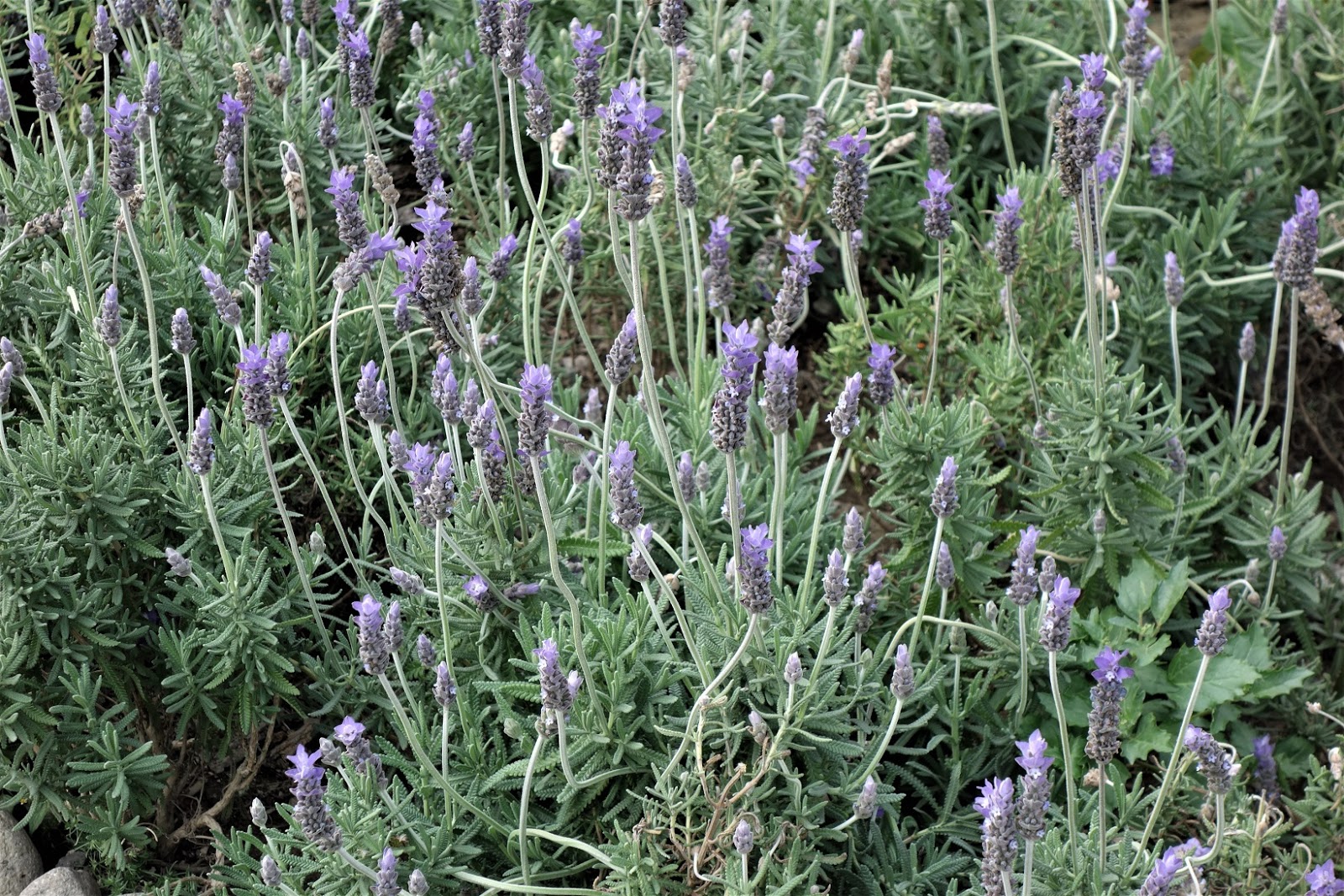
Among the plantings are a variety of succulents and lavender.


This project could be a lovely, green oasis in the middle of the hubbub of the city.  There are still miles of pathway to be completed.  I have my doubts, and I am going to reserve judgement until I see how well it is maintained.  As a gardener I know how quickly flower bed can be choked with weeds.    


Wednesday, February 14, 2018

Valentine's Day

Today is Valentine's Day and it is also Ash Wednesday.
Alejandro sent me this funny picture...


Tuesday, February 13, 2018

Into the Woods (Part Two)

Continuing my exploration of Mexico City's most famous park... the Forest of Chapultepec...

By this time I was to the west of Chapultepec Hill, away from the areas of the park that most tourists visit.  I came upon a totem pole which had been presented as a gift from the Canadian government on the 150th anniversary of Mexico's independence.


A short walk to the north led me to the very impressive Fountain of Nezahualcoyotl.


Nezahualcoyotl was the King of Texcoco, a city which was closely allied with the Aztecs.  In addition to ruling as king, he was a philosopher, poet, architect, and engineer.  In the previous post I mentioned that Nezahualcoyotl is said to have planted cypress trees in the forest of Chapultepec.  He also designed an aqueduct to carry potable water from the springs at Chapultepec Hill to the Aztec capital.  So it is fitting that he should be honored here in the park with this fountain.


The fountain is at least 100 feet long.  All along it are carvings which depict the life of the famous king.


At the end of the fountain is a massive wall and platform with a monumental statue of Nezahualcoyotl.


On the wall behind the statue are the symbols representing the three cities of the Triple Alliance which were the nucleus of the Aztec Empire.


First and foremost, there was Tenochtitlan, the capital of the Aztecs, which is today Mexico City.  Second was Texcoco, the city of Nezahualcoyotl, the intellectual "Athens" of the empire.  It is located 15 miles to the northeast of Mexico City.  Third was the junior partner of the Alliance, the city of Tacuba, which is today is a neighborhood in northwestern Mexico City.

A short distance from the fountain is this carrousel.  It certainly appears to be of antique vintage.


I am now approaching the northwestern corner of the park.  Here is a modern sculpture entitled "Energía" by a German artist by the name of Mathias Goeritz.


Just beyond that is a section of the park which I have never seen, and until a few year ago, I would have not been allowed to see it.  It is called "el Jardín de Adultos Mayores"... The Senior Citizens' Garden.  You must be 60 years old to enter.  There was a policeman at the entrance, and I was prepared to show him my driver's license.  But I told him that I was 65,  and he waved me on.

It is a very tranquil, attractive section of the park.


There were tables set up where senior citizens were playing dominos or cards.


Sculptures dot the garden.


Within the Senior Citizens' Garden and at the very corner of the park is this pavilion which was donated to Mexico in 1968 by the Republic of South Korea,


It is a replica of a 7th century pavilion in Seoul, Korea.  It can be seen through the fence running along the Paseo de la Reforma, but if you are within the seniors' garden you can appreciate at close range its colorful details.


By this time it was late afternoon and time for me to hop on the subway and head back to my apartment.