CDMX

CDMX

Saturday, April 22, 2023

Honoring a Collector of Folk Art

There was one more special exhibit at the Museum of Popular Arts that I wanted to see.  Until September, visitors will be able to see the private collection of Mexican handicrafts and folk art that belonged to Marie Therese Hermand de Arango.


Marie Therese Hermand de Arango was born in Egypt to an Egyptian mother and a Belgian father.  The family moved to Mexico when Marie Therese was a teenager, and she eventually married Manuel Arango Arias, member of a prominent family of businessmen and philanthropists.  From the time that she came to Mexico, Marie Therese was fascinated by Mexican folk art, and over the years she amassed a large, eclectic collection.  She was one of a group of women who worked for the creation of a museum dedicated to the rich tradition of Mexican artisans.  Their dream came to fruition in 2006 when Museum of Popular Arts opened in Mexico City.

Last December, Marie Therese Hermand de Arango passed away at the age of 74.  This exhibition is a tribute to her efforts toward the creation of the museum and her promotion world-wide of Mexican culture.


Here are some of the items from her personal collection that are on display at the museum...

I wouldn't call this sophisticated punchbowl a work of "folk art", but it is a beautiful example of the skill of Mexican silversmiths.


The town of Metepec is famous for its clay figures known as "Trees of Life".  They originally were depictions of the story of Adam and Eve, but now portray a wide variety of themes.  The theme of this one is the Biblical story of the Creation.


A ceramic, hand-painted plate from the state of Michoacán


Another plate, this one an example of Talavera-ware from the city of Puebla.  The two figures are probably Isabel and Fernando (Queen Isabella and King Ferdinand) of Spain.


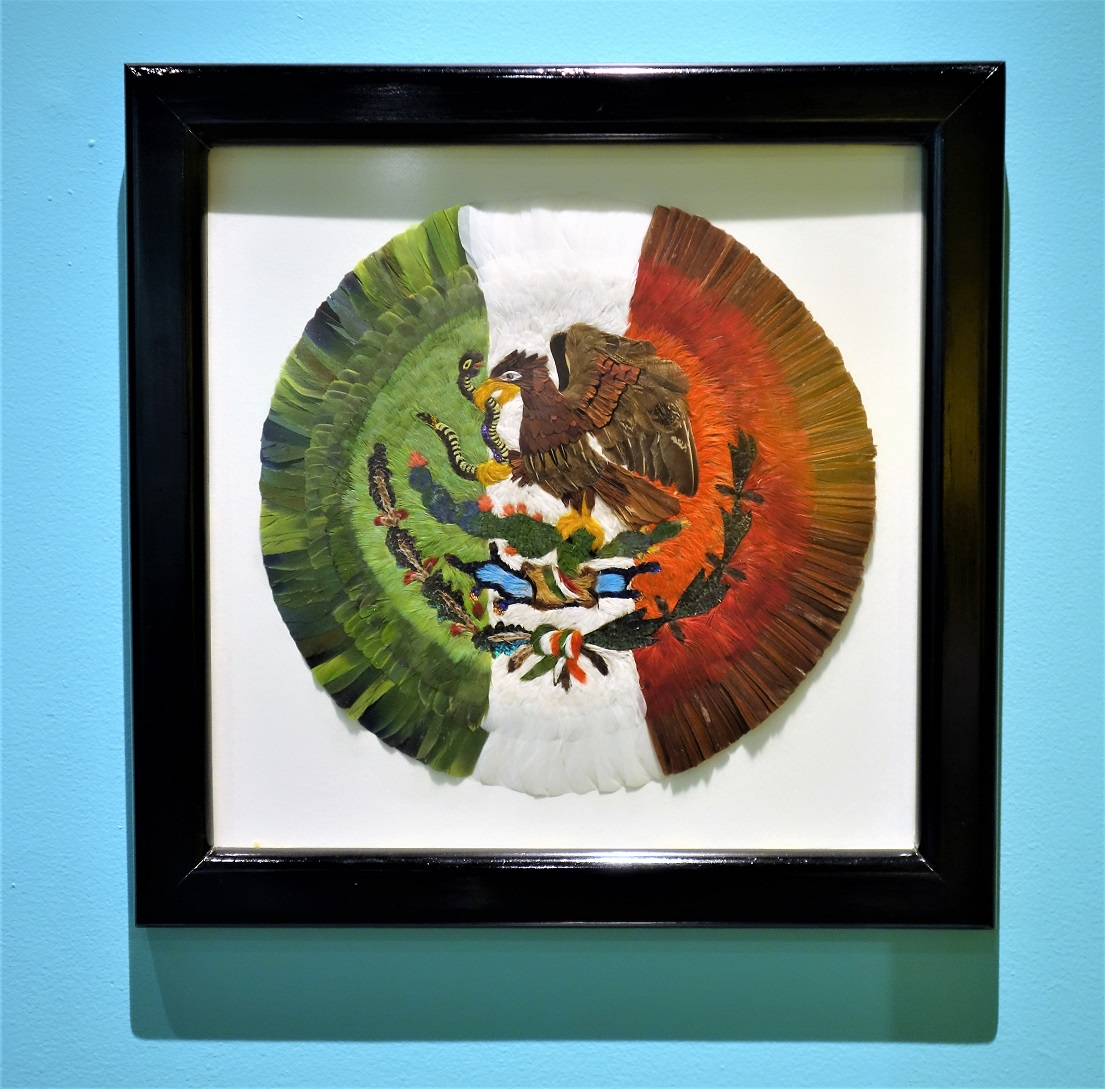
The coat of arms of Mexico is created from feathers.


A showcase filled with miscellaneous miniatures.


A showcase filled with Mexican jewelry.


A collection of small objects carved out of bone.


A couple of ceramic owls.


Small pieces of handiwork simply identified as "the work of nuns".


A lacquered tray from the state of Michoacán.


A chest of inlaid wood.


A "serape" and a "sombrero".


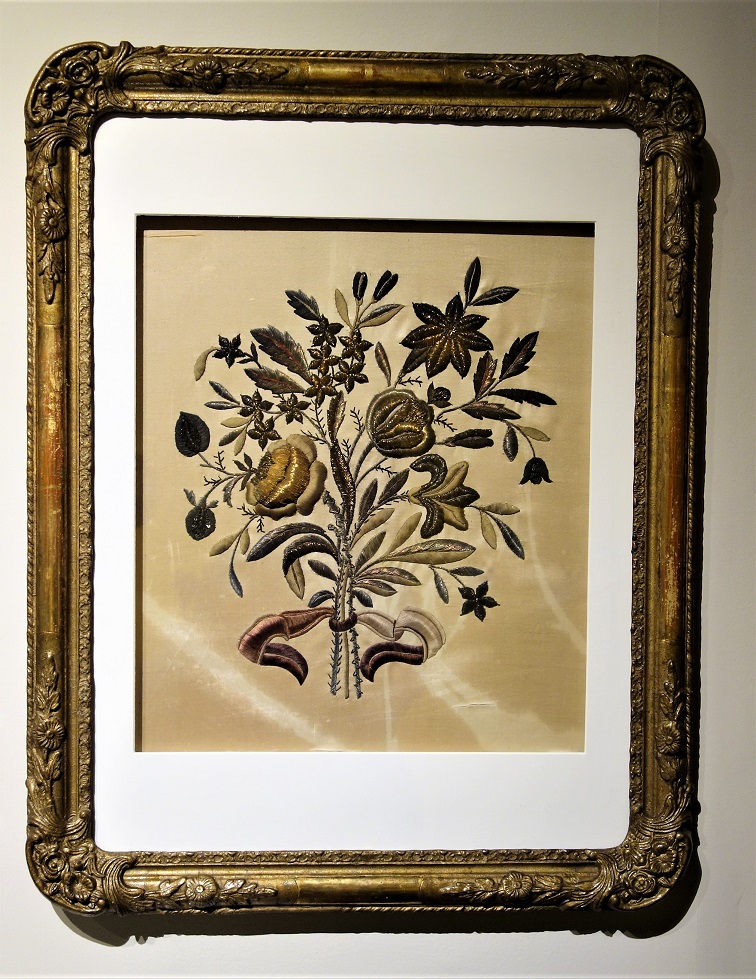
An embroidered picture of a bouquet done with gold thread.


A seashell etched with the image of the Virgin of Guadalupe.


From the state of Oaxaca, this coconut shell is etched with a drawing of an iguana.


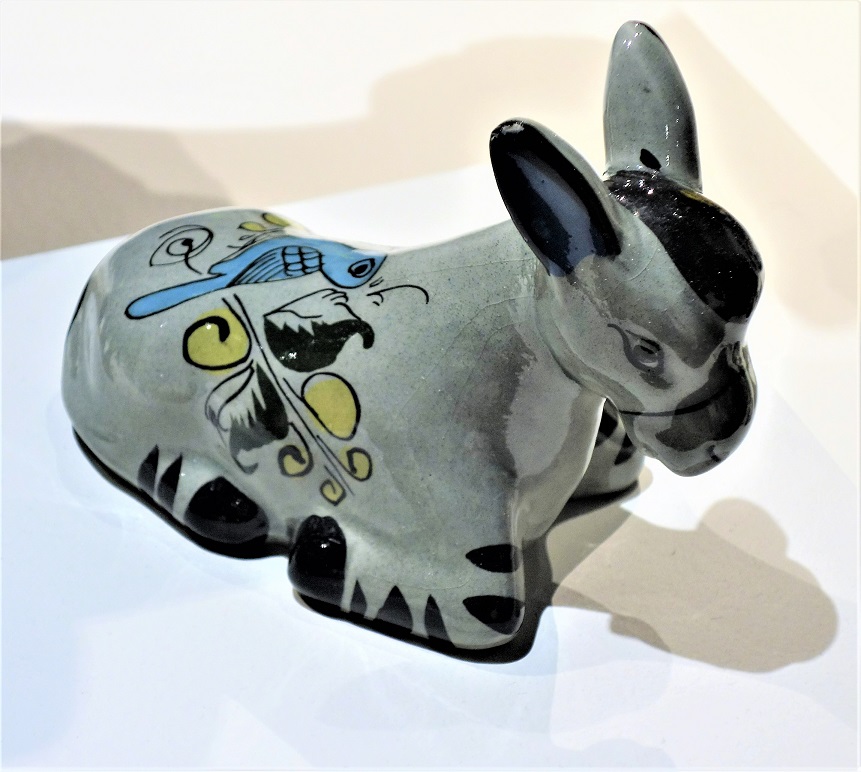
A ceramic donkey, from Tonalá, a town in the state of Jalisco that is famous for its pottery.


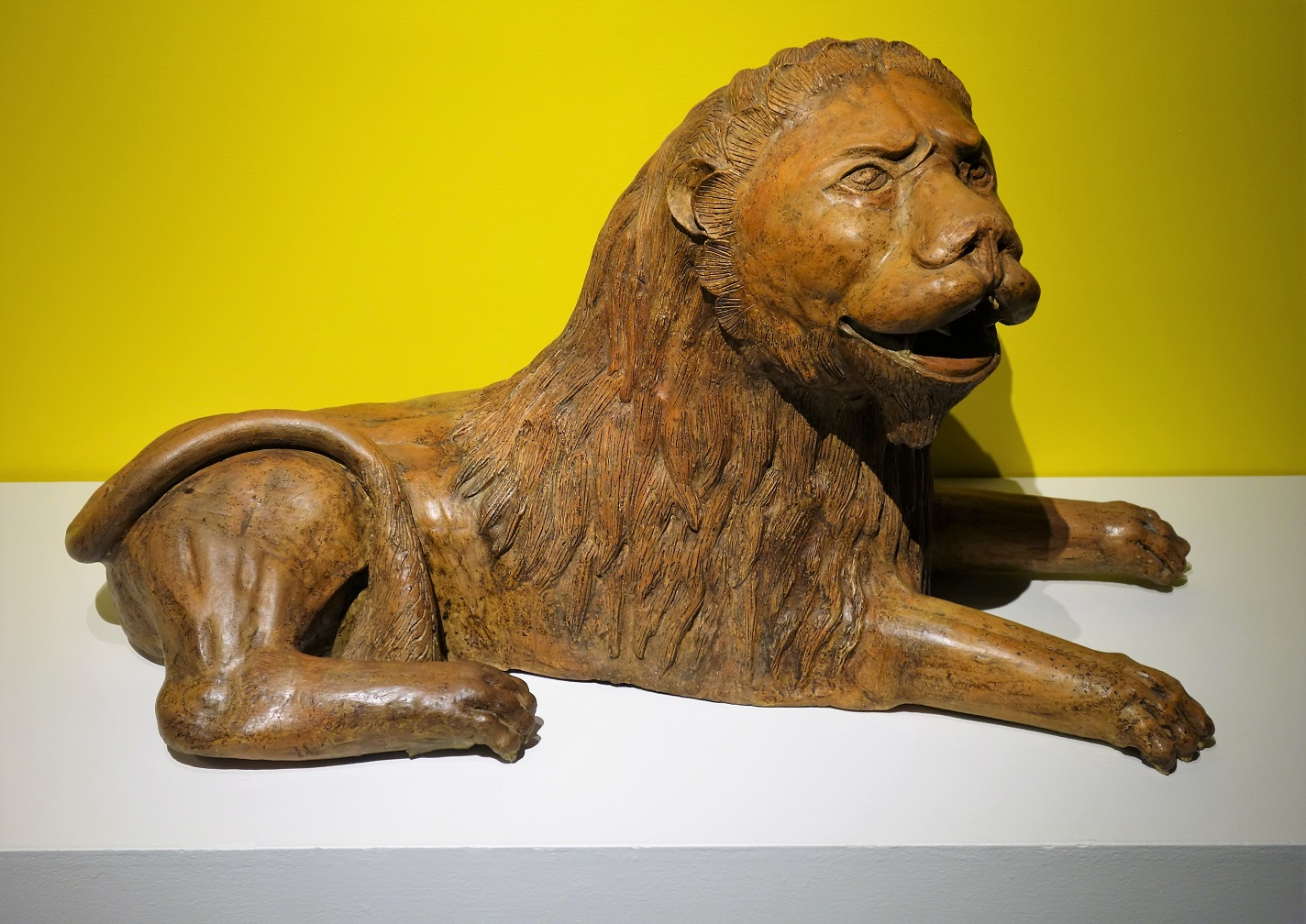
A large lion modeled from clay from the state of Guanajuato.


Thanks to people like Marie Therese Hermand de Arango, the Museum of Popular Arts preserves and promotes the nation's rich tradition of handicrafts and folk art.

Friday, April 21, 2023

An Iconic Garment of Mexico

The "huipil" is a garment that has been worn by indigenous women in many parts of Mexico for thousands of years.  It is a blouse or dress, depending on its length, that is simply two rectangular pieces of fabric sown together on three sides with holes for the head and arms.  It probably originated among the Mayas in Yucatán and spread to other regions from there.  The name comes from the Aztec word "huipilli" which meant a decorated blouse or dress.  It is indeed the embroidery of these garments which makes them works of popular art.  It is said that you can identify the region and ethnic group of a woman by the decoration on her "huipil".

There is a currently a small, special exhibit of "huipiles" at the Museum of Popular Arts.  Here are some of the garments on display, most of them coming from the states of Oaxaca and Chiapas.


Here are some closeups that show the intricate embroidery, all done by hand, on these "huipiles".


In my next post, we will visit another special exhibit at the Museum of Popular Arts.

Go Fly a Kite

On Wednesday I went downtown again to visit one of my favorite small museums in Mexico City, the Museum of Popular Arts.  It seems that almost every time I come to Mexico City, there is another special exhibit at the museum that warrants a return visit on my part.

The museum is the sponsor of the the Alebrije Parade that is held each October as a kick-off to the Day of the Dead season.  In the courtyard there were several of the large, papier mache figures of fantastical creatures from the parade.


The museum also sponsors an annual contest of kites.  This is the sixteenth year for the contest, and the entries are on display, hanging from glass roof of the courtyard, through this coming weekend.


It was a bit difficult to try to photograph all of the individual kites, but here are some of the entries.


I don't know if the kites were all tested to see if they could actually fly.  I also don't know whether or not the judging has taken place yet.  There was no indication of which ones were winners.

There were a couple of other special exhibits, so there will be more to come from the Museum of Popular Arts.

Thursday, April 20, 2023

Always Blooming

Mexico City is famous for its thousands of jacaranda trees, but unfortunately they only bloom for a few months each year.  On the other hand, no matter what time of year I am here, it seems that the bougainvillea are flowering.


 The bougainvillea come in different colors, but it seems that purple is by far the most popular.